
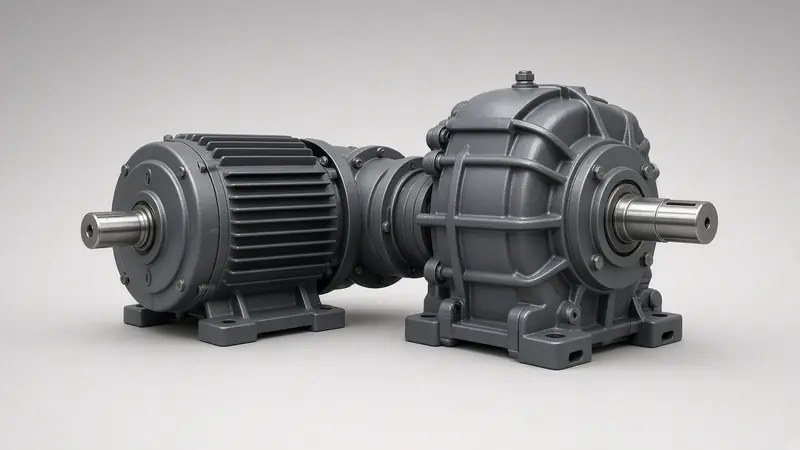
Helical Gearboxes
Helical gears have teeth cut at an angle, so each tooth engages gradually instead of all at once. The result is smoother, quieter running and higher load capacity than straight-cut spur gears, with high efficiency.
Helical gear units are among the most widely used reducers in industry, available in inline, foot- and flange-mounted designs.
Types and variants
- Single helical
- Double helical
- Herringbone
Sizing a helical gearbox
Helical gears mesh gradually along an angled tooth, so they run quietly and transmit power efficiently – typically well above 90% per stage. To size a gearbox, start from the input power and speed, the output speed (which gives the ratio) and the output torque, then apply a service factor for the type of load: uniform loads such as conveyors need less margin than shock loads such as crushers.
Also confirm mounting (foot, flange or hollow shaft), shaft arrangement and any overhung load from sprockets or pulleys. Helical units are commonly driven by IE3 motors through a coupling. For right-angle drives see spiral bevel or worm gearboxes; all types are on the gearboxes page.
Where it is used
- Conveyors and elevators
- Mixers and agitators
- Pumps and fans
- General industrial drives
Helical Gearboxes – FAQ
Why are helical gears quieter than spur gears?
The angled teeth come into mesh gradually and several teeth share the load at once, which reduces impact, noise and vibration.
Get today's price
Tell us what you need. We reply with price, availability and delivery time.
Please include
- Product, brand or model
- Capacity, rating or size
- Quantity
- Delivery location
Get a helical gearbox quote
Tell us the rating, quantity and delivery location. We reply with options, price and delivery time.