
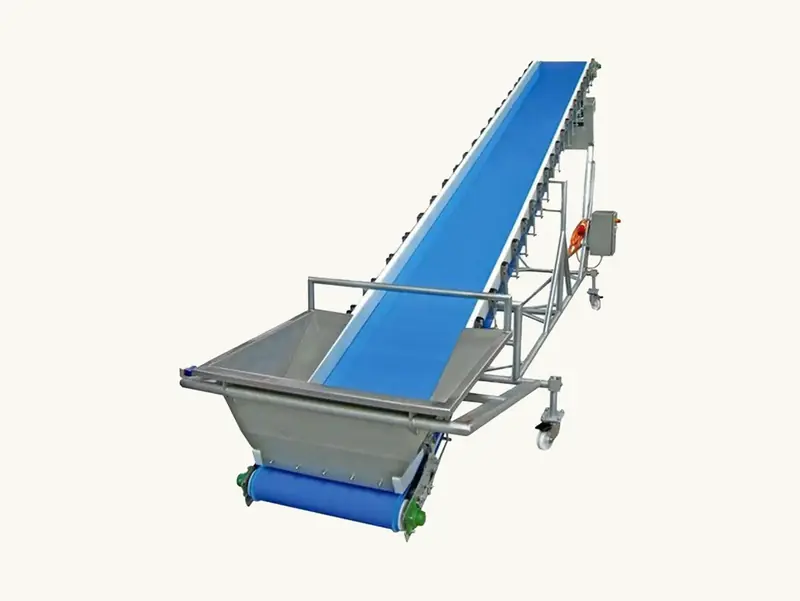
Conveyor
Belt conveyors carry bulk material continuously between the stages of a plant: from the crusher to the screen, from the screen to stockpiles, or into bins and trucks. Width, length, speed and incline are chosen to suit the material and the required capacity.
Conveyor specifications
| Specification | Value |
|---|---|
| Capacity | Sized to the output you need (TPH or m³/h) |
| Models / sizes | Supplied to order; share your requirement for a quote |
| Drive / power | Motor rating matched to the machine and duty |
| Feed material and size | Confirmed with you before we recommend a machine |
Sizing a belt conveyor
Conveyor capacity depends on belt width, belt speed, the troughing angle and the bulk density of the material. Length and lift decide the drive power; inclines above about 18–20 degrees usually need a cleated belt or a bucket elevator instead. Abrasive material such as granite needs a heavier belt cover.
The drive is typically a motor with a helical or shaft mounted gearbox. Fit a magnetic separator ahead of the crusher to remove tramp iron. See all plant machinery.
How to order
Where it is used
- Crushing and screening plants
- Batching plants
- Bulk material handling
- Loading and stockpiling
Conveyor – FAQ
What do you need to quote a conveyor?
The material and its maximum feed size, the output you need (sizes and TPH or m³/h), the site location and power supply. Photos of the site and existing equipment help us size the conveyor.
Get today's price
Tell us what you need. We reply with price, availability and delivery time.
Please include
- Product, brand or model
- Capacity, rating or size
- Quantity
- Delivery location
Other plant machinery

Get a conveyor quote
Tell us the rating, quantity and delivery location. We reply with options, price and delivery time.